
Reviewed by Dr. Tiffany Deaton
|
Reading time: four minutes
Some pain and tenderness are expected after a tooth extraction. The important question is whether your symptoms are gradually improving or becoming more intense. Pain that worsens a few days after the procedure may be a sign of dry socket and should be evaluated.
With two convenient locations in Summerville, Deaton Dental Associates and Flowertown Dentistry provide comprehensive dental care for patients of all ages.
Table of Contents
How Can You Tell If You Have Dry Socket?
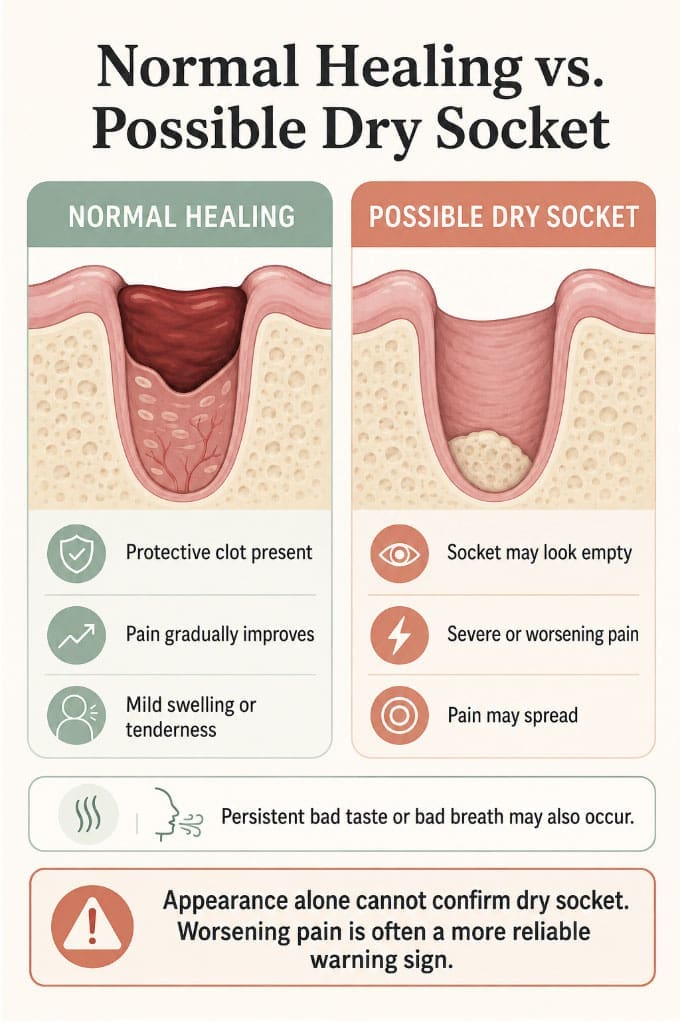
During normal healing, a blood clot forms in the socket to protect the bone and nerves underneath. Normal extraction pain is usually most noticeable during the first day or two and then begins to ease. Dry socket symptoms commonly appear or become worse within a few days of the extraction.
Dry socket often follows a different pattern:
- Severe or throbbing pain at the extraction site
- Pain that spreads toward the ear, temple, eye, jaw or neck
- Pain that does not respond well to recommended medication
- Persistent bad breath
- A foul or unpleasant taste in the mouth
What Is a Dry Socket?
Dry socket, also called alveolar osteitis, is a complication that can develop after a permanent tooth is removed. It occurs when the blood clot protecting the extraction site becomes dislodged, dissolves too soon or does not form properly.
Without that protective clot, the bone and nerves beneath the socket may become exposed. This can cause significant pain and interfere with the early stages of healing. Dry socket is more common after wisdom tooth removal, but it can occur following other extractions as well.
How Is Dry Socket Treated?
Treatment focuses on relieving pain and protecting the exposed area while healing continues. Your dentist may gently clean the socket to remove debris and place a medicated dressing inside it. Pain relief may also be recommended based on your symptoms and medical history. Some dressings need to be replaced, while others can remain in place as the area heals.
Protect the Extraction Site During Healing
Following your post-extraction instructions can help protect the blood clot and support healing.
You may be advised to:
- Avoid smoking, vaping and other tobacco products
- Avoid straws during early healing
- Do not rinse or spit forcefully
- Brush carefully around the extraction site
- Choose soft foods and chew away from the area
- Avoid touching or disturbing the socket
- Follow instructions for rinsing and pain relief
If you are unsure about any part of your aftercare, contact the office that completed the procedure rather than trying to clean the socket yourself.
Are You Concerned About Healing After an Extraction?
Pain that is severe, spreading or worsening should not be ignored. If you are a patient of Drs. Rhett Deaton and Tiffany Deaton, contact us to schedule an evaluation. If you are being treated elsewhere, reach out to your dentist promptly for guidance.
To book an appointment at Deaton Dental Associates, call (843) 873-3706 or visit us at 209 W 5th N St, Summerville, SC 29483.
To book an appointment at Flowertown Dentistry, call (843) 871-0814 or visit us at 445 North Cedar St, Summerville, SC 29483.
FAQ
What does dry socket look like?
A dry socket may appear empty because the blood clot is missing. In some cases, you may be able to see whitish bone at the bottom of the socket. However, appearance alone is not always reliable, since normal healing tissue can also change how the area looks.
What does dry socket feel like?
Dry socket typically feels like a deep, severe, or throbbing pain coming from the extraction site. The pain may radiate to the ear, jaw, temple, or neck and often becomes worse rather than better a few days after the tooth is removed. Many people also describe it as a constant, intense ache that is not well controlled with standard pain medication.
How can you tell if the clot is healing normally vs. if it’s dislodged?
A healing blood clot usually stays in place and is gradually replaced by new tissue, with discomfort slowly decreasing over time. If the clot is dislodged, pain often increases significantly after initial improvement, and the socket may look empty or more exposed. Only a dental exam can confirm what is happening.
Does a dry socket ever fully heal?
A dry socket will eventually heal once it is treated and the area is protected. With proper care, new tissue will form and the socket will close over time, although it may take longer to heal than a normal extraction site.